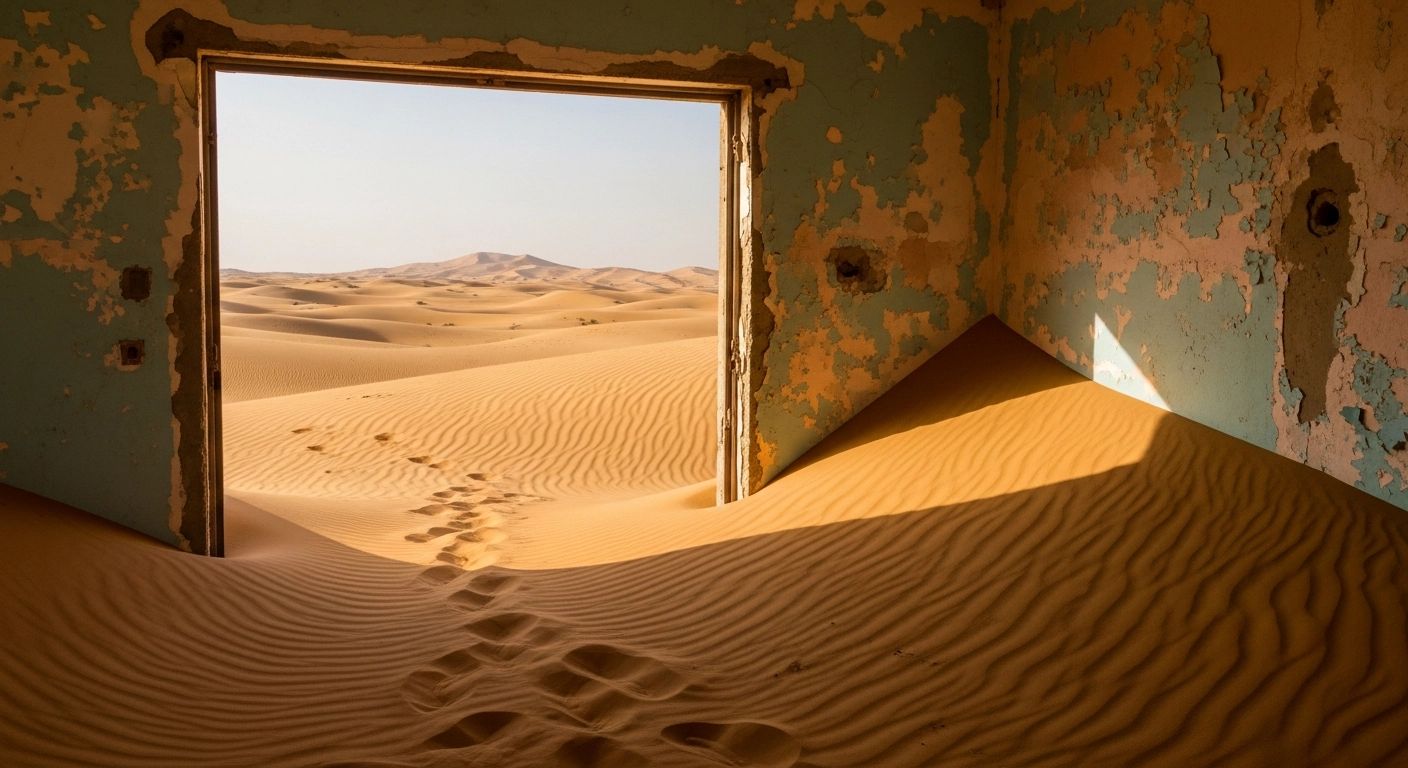
This is a modern luxury development being swallowed by dunes. Sand is literally pouring through the master bedroom windows and burying the kitchens in a surreal show of nature vs. wealth. Forget your preconceived notions of Dubai's endless steel and glass; a mere hour's drive from the glitter of the Burj Khalifa, the desert is staging a hostile takeover, and it's a spectacle far more compelling than any choreographed fountain show. These aren't ancient ruins or forgotten forts; these are relatively new, abandoned homes, now half-submerged, offering a chilling glimpse into how quickly even ostentatious wealth can be rendered obsolete by the sheer, indifferent force of nature.
Getting to Al Madam Ghost Village, located near Sharjah, isn't something you'll find on glossy tour brochures, and for good reason: it requires a particular kind of grit and preparation. Unlike the air-conditioned ease of Dubai Mall, this is a self-guided expedition into the unknown. You absolutely need a 4x4 vehicle; don't even think about attempting this in a sedan, unless your idea of fun involves a hefty towing bill and a healthy dose of embarrassment. A typical 4x4 rental will set you back around $50-$100 per day, depending on the model and rental duration, plus the cost of petrol, which is mercifully cheaper in the UAE than back home. Stick to a budget rental from the airport rather than a city outfit for better deals, and always check for sand recovery gear.
Visiting between March and June means contending with the rapidly escalating desert heat. March offers a sweet spot, with temperatures averaging a bearable 80-90°F (27-32°C), but by June, you're looking at a scorching 105°F (41°C) or higher. This isn't just uncomfortable; it's genuinely dangerous without proper hydration and sun protection. Plan your visit for the early morning, arriving right at sunrise, to capture the best light for photography and avoid the midday inferno. This off-season timing, however, can be a blessing for flight prices from the U.S., which often see a dip as fewer Western tourists brave the summer heat, making those $800-$1200 roundtrip fares more attainable than the peak season's premium.
Once you navigate the sandy tracks to Al Madam, the silence is profound, broken only by the whisper of wind carrying more sand. The village itself consists of a handful of houses and a mosque, all eerily intact yet utterly consumed. Walk through the front door of a villa and find the living room floor a sloping dune; peek into a bedroom and see sand cresting over the windowsill, a golden tide claiming every surface. It’s a photographer’s dream and a haunting meditation on transience. This isn’t a designated tourist site, so there are no entrance fees, no gift shops, and crucially, no amenities. Bring all your own water, snacks, and dispose of everything properly.
Beyond the ghost village, the surrounding region of Sharjah offers more genuine, overlooked experiences that sidestep Dubai’s consumerist whirl. Instead of paying for a contrived desert safari, consider a visit to Fossil Rock (Jebel Faya). Just a short drive from Al Madam, this dramatic rock formation is exactly what it sounds like – a mountain replete with ancient marine fossils, a stark reminder of the region's deep geological history. It’s free to visit, offers incredible hiking opportunities, and provides panoramic views of the desert, a refreshing contrast to the flat, sandy approaches to Al Madam.
Another gem is the Mleiha Archaeological Centre, situated close by. While there is an admission fee (around $14-$20 for adults, depending on the package), it's a worthwhile investment. This award-winning center offers guided tours to Bronze Age tombs, pre-Islamic forts, and even camel rock carvings, delving deep into the human history of the region long before oil and skyscrapers. It’s a fascinating narrative that puts the brief, abandoned luxury of Al Madam into a much broader, more profound historical context, offering real cultural value often missed in the Dubai bubble.
For a true taste of local life and to save a significant chunk of change on food, skip the high-end eateries in Dubai and head into Sharjah city for an authentic Emirati meal. Restaurants like Al Arsa Cafe or Al Fanar Restaurant offer traditional dishes like Machboos (spiced rice with meat) or Harees (wheat and meat porridge) for a fraction of what you’d pay in Dubai’s tourist zones. Expect to pay around $10-$20 per person for a hearty meal, a sharp contrast to the typical $50+ you might drop in a Dubai mall.
The biggest pitfall, apart from the heat, is underestimating the desert itself. Driving off-road requires some experience; if you're not confident, rent a vehicle with a knowledgeable local driver for a day. Always ensure your phone is fully charged, and consider downloading offline maps like Maps.me, as cell service can be spotty. Tell someone your itinerary and expected return time. This isn't a theme park; it's raw nature, and it demands respect. But for the curious traveler seeking genuine discovery, Al Madam and its surroundings offer a poignant, budget-conscious alternative to the polished facade of modern Dubai – a place where nature still wins, even against millions of dollars.