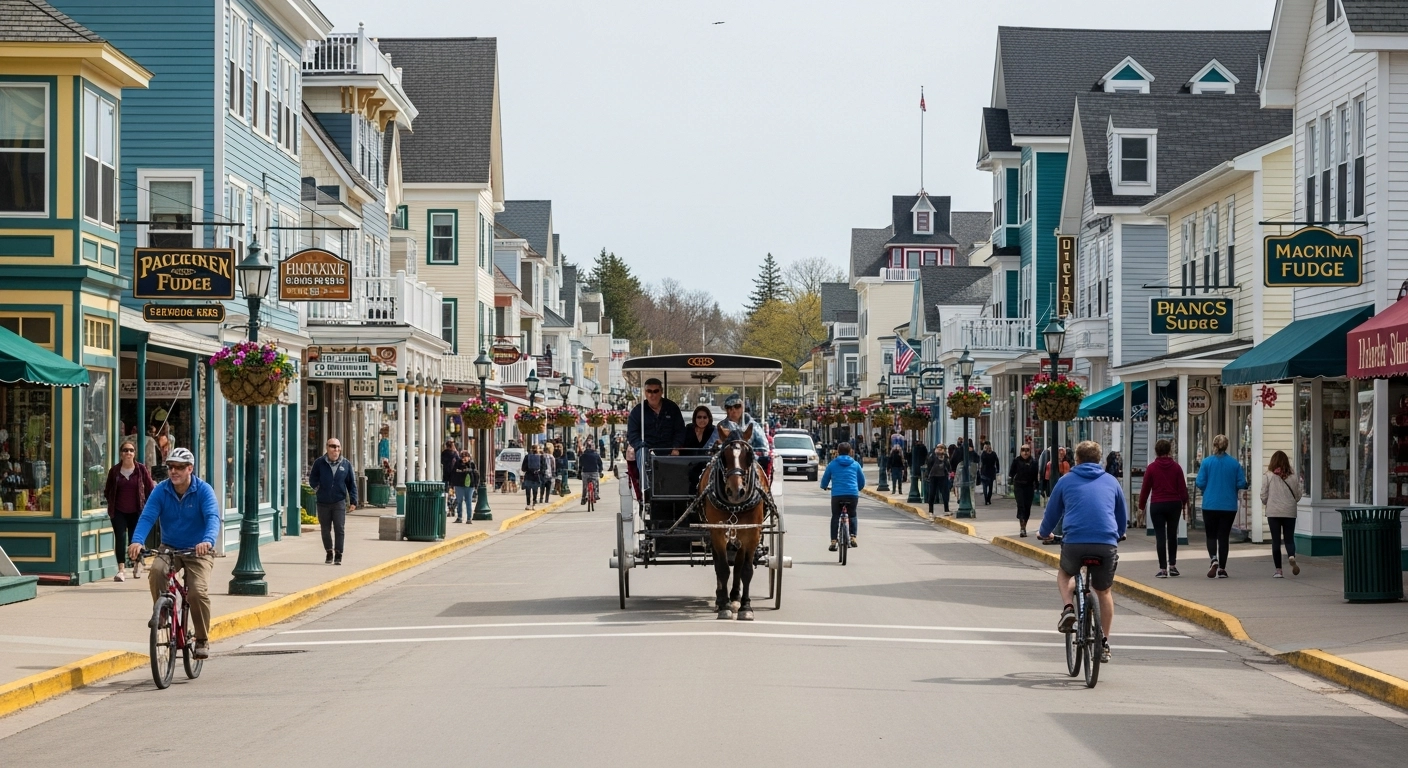
Imagine a place where the loudest sound isn't a rumbling engine, but the rhythmic clip-clop of horse hooves on asphalt, or the cheerful jingle of a bicycle bell. This isn't some historical reenactment, nor a remote, forgotten village; it's Mackinac Island, Michigan, a fully functioning American community that, over a century ago, drew a line in the sand against the automobile and declared, "Nope, not for us." While the rest of the world zoomed into the 20th and 21st centuries, Mackinac Island stayed delightfully, defiantly analog, a high-functioning society that literally gets its Amazon deliveries via horse-drawn carriage.
Before you book your ticket expecting a pastoral utopia free from modern inconveniences, let's get real. This quaint refusal of internal combustion engines comes with its own set of rules and, crucially, costs. Mackinac Island is undeniably charming, a true step back in time, but it’s also a premium experience, especially as summer approaches. For American travelers eyeing a trip between March and June, the sweet spot for balancing weather, crowds, and your wallet often lies squarely in April or early May, before the summer surge transforms it into a theme park of tourists.
Getting to this car-free haven is an exercise in intentional travel. You'll likely drive to Mackinaw City or St. Ignace, park your car (expect $15-$30/day for secure parking, less in the shoulder season), and then board a ferry for the roughly 20-minute ride. From most major US cities, this journey translates into a full travel day, often requiring an overnight stay on the mainland if you’re driving a significant distance. The ferries begin limited operations in late March, ramping up to frequent departures by May. Traveling in the earlier part of the season means shorter lines, more choice for seats, and a generally calmer introduction to island life.
Once on the island, your primary modes of transport are your own two feet, a bicycle, or a horse-drawn taxi. Renting bikes on the island costs roughly $20-$30 for a full day, an expense that adds up quickly for families. Savvy travelers, especially those planning a longer stay or multiple visits, often bring their own bicycles on the ferry for a nominal fee (around $10-$15 round trip). While horse taxis offer a charming, truly unique way to get around, they’re not cheap – akin to standard taxi fares in major cities, so budget accordingly or reserve them for special occasions. The island's inherent quietness, free from engine noise, is the true luxury here, an immersive silence that few places on the continent can still claim.
Beyond the postcard-perfect Main Street, many visitors stick to the well-trodden paths. A truly overlooked experience is simply biking the entire M-185, the 8.2-mile state highway that circles the island's perimeter. It's the only state highway in the nation where motorized vehicles are permanently banned. While Main Street buzzes, the backside of the island offers breathtaking views of Lake Huron, often with fewer crowds. Pack a picnic, find a secluded spot, and let the vastness of the lake remind you what "unplugged" really feels like. This quiet circuit is a stark contrast to the fudge-fueled frenzy of the main drag.
Venturing into the island's interior offers another layer of discovery. Most tourists gravitate towards the Fort Mackinac and Grand Hotel, but the sprawling network of hiking and biking trails crisscrossing the island's forested core provides genuine solitude. Seek out landmarks like Arch Rock early in the morning before the crowds arrive, or explore the less-visited British Landing and Devil's Kitchen. These interior paths feel like a different island altogether, a natural preserve largely untouched by the commerce of the waterfront. For a dose of history away from the main fort, the Post Cemetery offers a poignant, quiet reflection point.
While the Grand Hotel's iconic porch view comes with a hefty entry fee for non-guests ($10-20), you can still experience some of its old-world grandeur without emptying your wallet. Stroll through its exquisite gardens for free, or simply admire the architecture from the street. As for dining, island prices reflect the logistics of getting everything onto a car-free island. To save money, pack your own snacks and drinks for daytime excursions. The famous Mackinac Island fudge, while a delightful treat, isn't a meal replacement. Look for local bakeries or delis for more budget-friendly lunch options, or consider staying on the mainland for cheaper lodging and ferry over for day trips.
The weather in March and April can be brisk, requiring layers, but often rewards with clear skies and dramatically reduced ferry and lodging prices. By May, the island truly awakens, with blooming lilacs and most businesses in full swing, offering a near-perfect balance of good weather and manageable crowd levels. June, however, heralds the start of peak season: expect warmer temperatures, but also fully booked ferries, crowded streets, and significantly higher prices across the board. The atmosphere shifts from serene escape to bustling summer resort.
Don't mistake Mackinac Island for a relic incapable of functioning. It’s a testament to intentional living, proving that progress isn't always about speed or convenience. Sure, you won’t find a drive-through, but you will find a vibrant community that prioritizes peace, natural beauty, and a unique rhythm of life. It’s an American anomaly that actively chooses to define its own version of modernity, offering a refreshingly quiet escape from the constant hum of the engine-driven world. This isn't just a trip; it's a re-evaluation of what makes a place truly special.