Let's cut right to it: Aachen smells. Not a charming, Old World potpourri, but a distinct, pervasive odor of sulfur, like a thousand rotten eggs just cracked open. So why, then, does this German city, built on the very thermal springs that emit this pungent aroma, attract crowds of locals and tourists alike, all lining up to sip this noxious brew? Because for over 1,200 years, this "terrible" water has been Aachen's secret weapon, a health hack whispered about by European royalty and still revered today. I went, I smelled, I conquered my gag reflex, and I understood.
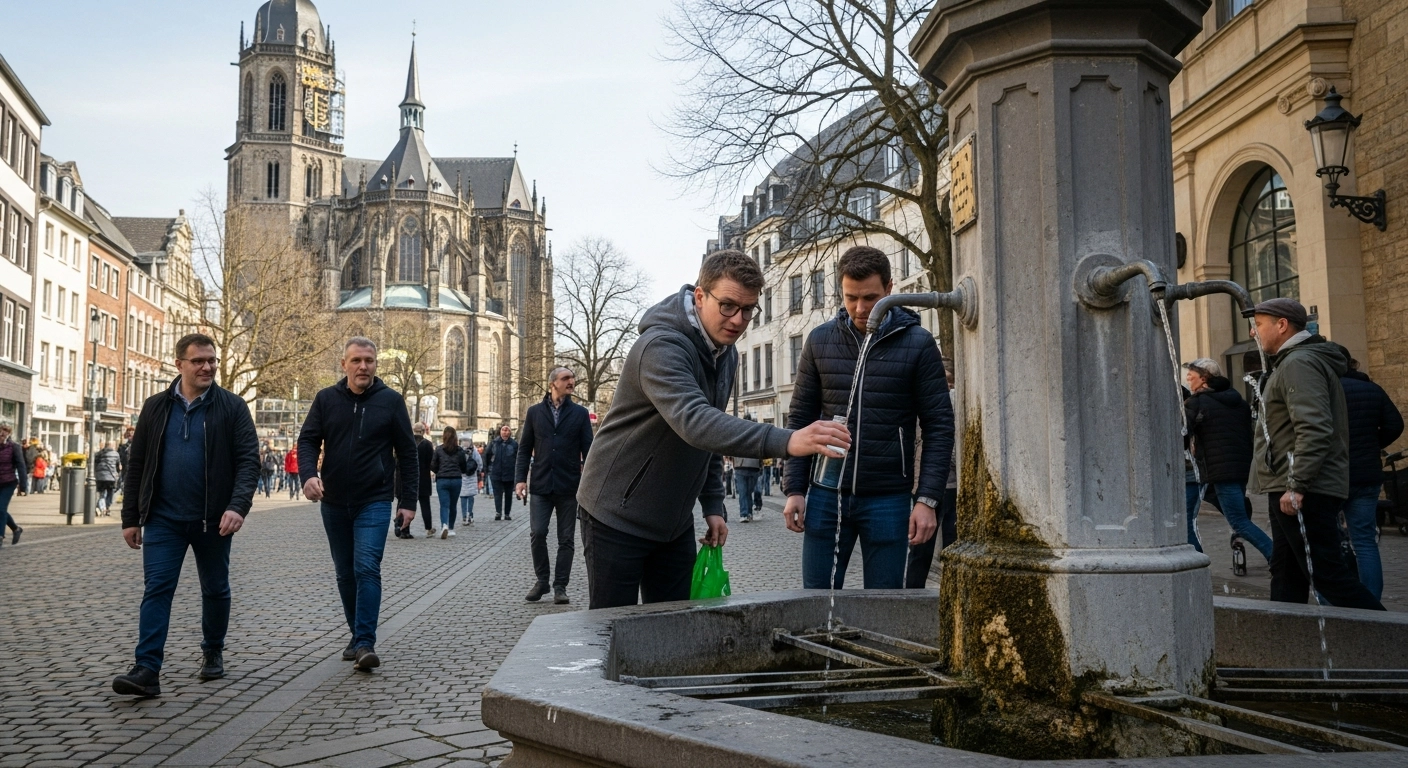
My first encounter with Aachen's infamous water was at the Elisenbrunnen, a neoclassical pavilion housing two drinking fountains. The air here hangs heavy with that unmistakable sulfuric tang. Yet, people—elderly couples, brisk walkers, even a few intrepid teens—queue up, filling bottles or simply taking a direct sip. It’s free, it’s historic, and it’s an undeniable part of the Aachen experience. My initial reaction was pure skepticism, bordering on revulsion. Who willingly drinks something that assaults the nostrils like this? But seeing the casual confidence of the locals, I decided to take the plunge. The taste is… earthy, mineral-rich, and surprisingly less offensive than the smell suggests, once you get past the mental hurdle. This isn’t just a novelty; it's a centuries-old tradition, an everyday dose of "wellness" that costs exactly zero Euros.
If the Elisenbrunnen is the raw, unadulterated heart of Aachen’s thermal power, then the Carolus Thermen spa is its polished, luxurious counterpart. Here, the very same mineral-rich waters are channeled into elegant pools, saunas, and relaxation zones. You won't find the raw smell quite as potent here, thanks to clever ventilation and the sheer scale of the complex. It’s a stark contrast to the free fountains outside: a half-day pass can run you €20-€30, but it offers a genuinely restorative experience, a sanctuary of warmth and tranquility. My advice? Experience both. Drink for free at the Elisenbrunnen for the story, then splurge on a few hours at Carolus Thermen to truly understand why this water has been prized for millennia. It's an investment in relaxation, a tangible reward after braving the city's aromatic public fountains.
Beyond the water, Aachen is steeped in the legacy of Charlemagne, its true "logic" long before the spa circuits were drawn. The Aachen Cathedral (Dom), a UNESCO World Heritage site, is not just a pretty church; it’s where kings were crowned for centuries. While the main nave is free to enter, don't miss the Treasury, an overlooked treasure trove of medieval artifacts (entry fee applies, around €6-€8). Many tourists snap a photo and move on, but venturing into the quieter corners of the Dom, or finding a bench in its peaceful courtyard, offers a palpable connection to history that few places can match. Aim for early mornings on weekdays during March-June to escape the larger tour groups and truly appreciate the intricate mosaics and solemn grandeur without feeling rushed.
Aachen’s charm extends to its culinary scene, specifically its famous Aachener Printen, a spiced gingerbread-like cookie. While you can find them everywhere, seek out smaller, traditional bakeries nestled in side streets for a more authentic taste and often better prices than the larger tourist shops around the Markt. Look for the "Original Aachener Printen" seal. Another overlooked experience is to wander into Aachen's smaller courtyards, known as "Höfe." These hidden gems, often tucked behind archways off main thoroughfares, offer quiet havens, boutique shops, and charming cafes. They’re perfect for a budget-friendly coffee break or simply to soak in the local atmosphere away from the bustling squares.
Visiting Aachen between March and June offers the sweet spot. The weather is transitioning from crisp spring to comfortable early summer, with average temperatures ranging from 10°C to 20°C (50°F to 68°F). This means pleasant walking weather without the stifling heat or the intense tourist throngs of July and August. Accommodation prices tend to be more favorable than peak summer, and flights from major U.S. hubs to Düsseldorf (DUS) or Cologne (CGN)—both about an hour by train—are typically more accessible. Expect roughly 7-9 hours of flight time from the East Coast, plus ground transfer. Aachen itself is incredibly walkable, so save your money on public transport within the city and explore on foot.
Ultimately, Aachen challenges your preconceptions. It forces you to embrace a contradiction: a city whose most famous asset smells like a science experiment gone wrong, yet promises ancient health benefits. It's a testament to human ingenuity and our enduring quest for well-being, even when it requires a wrinkled nose and a leap of faith. This isn't just a German city; it’s an living experiment in embracing the unconventional, and for those willing to lean into the sulfur, it’s an utterly unforgettable journey.