There’s a silent, slightly creepy tube running 1,217 feet directly under millions of tons of seawater in London, and if you haven’t walked it, you’re doing London wrong and probably wasting money. This isn’t some theme park ride or a well-advertised attraction; it’s the Greenwich Foot Tunnel, a genuine Victorian marvel from 1902 that serves as the ultimate local’s shortcut. While countless American tourists are shelling out fortunes for quick Uber trips across congested bridges or meandering on the DLR, this subterranean passage offers a glimpse into London’s no-nonsense past – and a free, utterly unique way to cross the Thames.
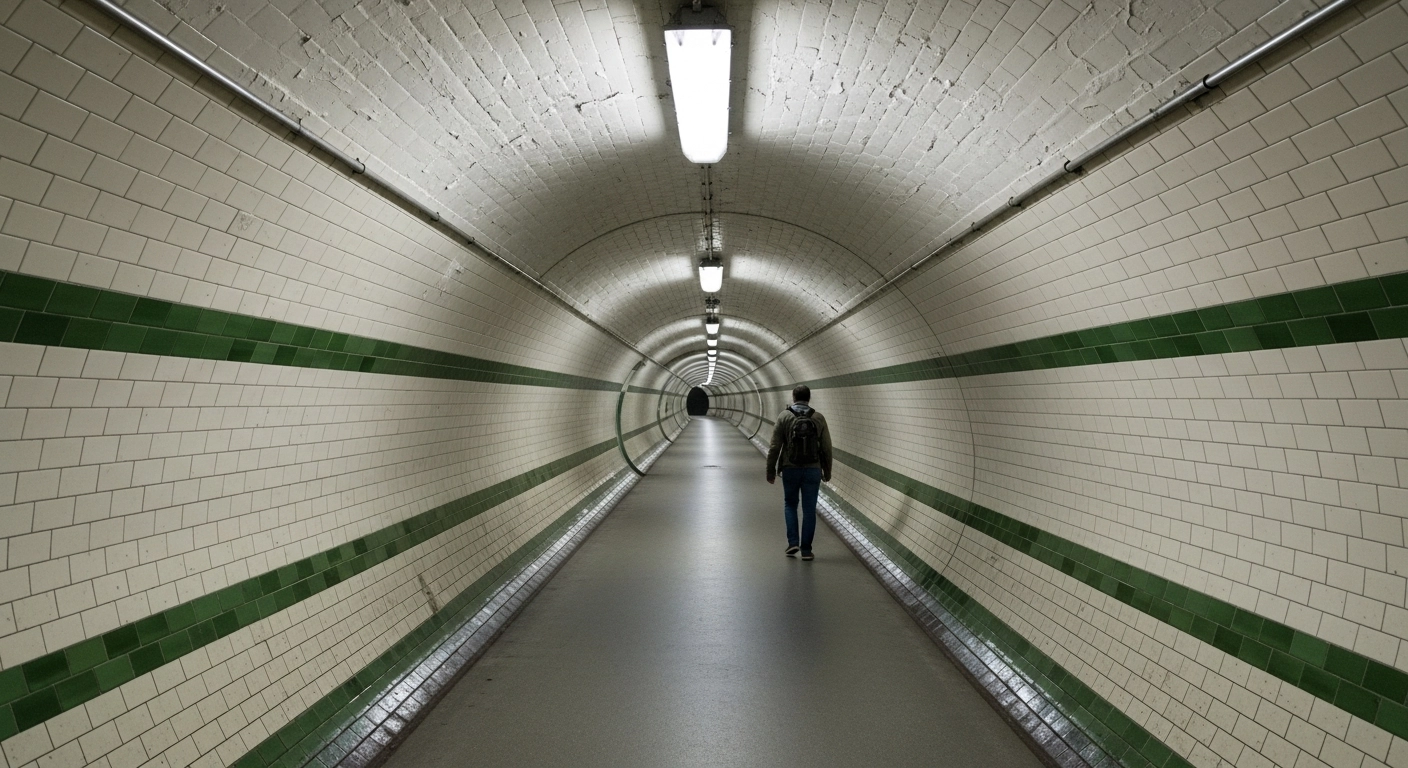
Stepping into its narrow, tiled confines from the Greenwich side feels like entering a low-budget sci-fi film or perhaps a forgotten time capsule. The air shifts, becoming cooler, damper, and the relentless hum of London above fades into an almost profound silence, broken only by your own footsteps and the occasional cyclist wheeling their bike (walking, per the rules, because nobody wants a collision in a tunnel under a river). The stark green-and-white tiles stretch endlessly, curving gently into the distance, an austere beauty that perfectly encapsulates Victorian utilitarian design. It’s a moment of bizarre solitude in one of the world's busiest cities, a truly unsettling yet fascinating experience as you ponder the sheer volume of water pressing down from above.
Forget the overpriced river cruises or the time-consuming detours that chip away at your carefully planned budget. The Greenwich Foot Tunnel offers an immediate, direct, and—crucially—absolutely free connection between the historical charm of Greenwich and the nascent modern sprawl of the Isle of Dogs. Consider the alternative: a ride on the DLR, while efficient, still costs you a tap of your Oyster card or contactless payment, and often involves a circuitous route. An Uber over Tower Bridge during peak hours? You might as well just hand over your entire daily budget for a fifteen-minute crawl. This tunnel, however, is a zero-cost marvel, a testament to practical engineering over performative tourism, designed for dock workers over a century ago and still perfectly functional today.
Accessing this subterranean marvel is straightforward, typically via the DLR (Docklands Light Railway), London’s efficient automated train system. From central London, aim for Cutty Sark station for the Greenwich entrance or Island Gardens for the north bank. Both stations are just steps from the tunnel entrances, identifiable by their distinctive brick rotunda buildings, housing both stairs and deceptively slow, often-queued elevators. If you're physically able, embrace the spiraling staircase; it adds to the adventure and often saves time. Bear in mind that while the tunnel is well-lit, it’s not exactly bustling, especially outside of commuter hours. During the shoulder seasons of March to June, you'll encounter fewer crowds overall in London, and the tunnel itself might feel even more deserted, amplifying its eerie silence.
Once you emerge, blinking, into the daylight, you’ve landed yourself right amidst a treasure trove of genuinely overlooked London experiences. On the Greenwich side, beyond the ubiquitous Royal Observatory (which, let's be honest, you can admire perfectly well from the free hill outside without paying to stand on a line to straddle a meridian), you have the National Maritime Museum and the Queen’s House, both offering free entry and stunning historical insights often bypassed for more 'famous' sites. Then there's Greenwich Market, less about tourist tat and more about genuinely interesting street food stalls and artisanal crafts – perfect for a budget-friendly lunch or unique souvenir that doesn't scream 'I overpaid for this in Piccadilly Circus.'
Crossing to the north bank via the tunnel brings you out into Island Gardens Park. Most tourists rush past this green space, but it offers one of the most magnificent, uninterrupted panoramic views of Maritime Greenwich, including the Cutty Sark and the Old Royal Naval College, all framed beautifully across the Thames. It's a prime photo op without the selfie-stick brigade. For an even wilder, genuinely quirky discovery, a short walk from Island Gardens will lead you to Mudchute Park and Farm. Yes, an actual working farm with llamas, cows, and pigs, nestled bizarrely amidst the gleaming skyscrapers of Canary Wharf. It’s an almost surreal juxtaposition, utterly free, and will leave you wondering if you've accidentally stepped into an alternate dimension of London.
Traveling from the US during March through June hits a sweet spot for London. The typical drizzly gray winter gives way to longer, brighter days and milder temperatures, usually in the 50s-70s Fahrenheit (10-20 Celsius), perfect for walking explorations. You'll avoid the suffocating crowds and peak prices of summer, though spring breaks can bring a noticeable bump in tourist numbers. Flights might still offer better value than July/August, and while accommodation will be creeping up, savvy travelers can still find deals, especially outside of central tourist hubs. Just remember that overnight flight and factor in a day to shake off the jet lag before you plunge headfirst into this city of contrasts, beginning, perhaps, with a walk under its very lifeline. Embrace the odd, the overlooked, and the truly authentic – starting with a stroll under a river.